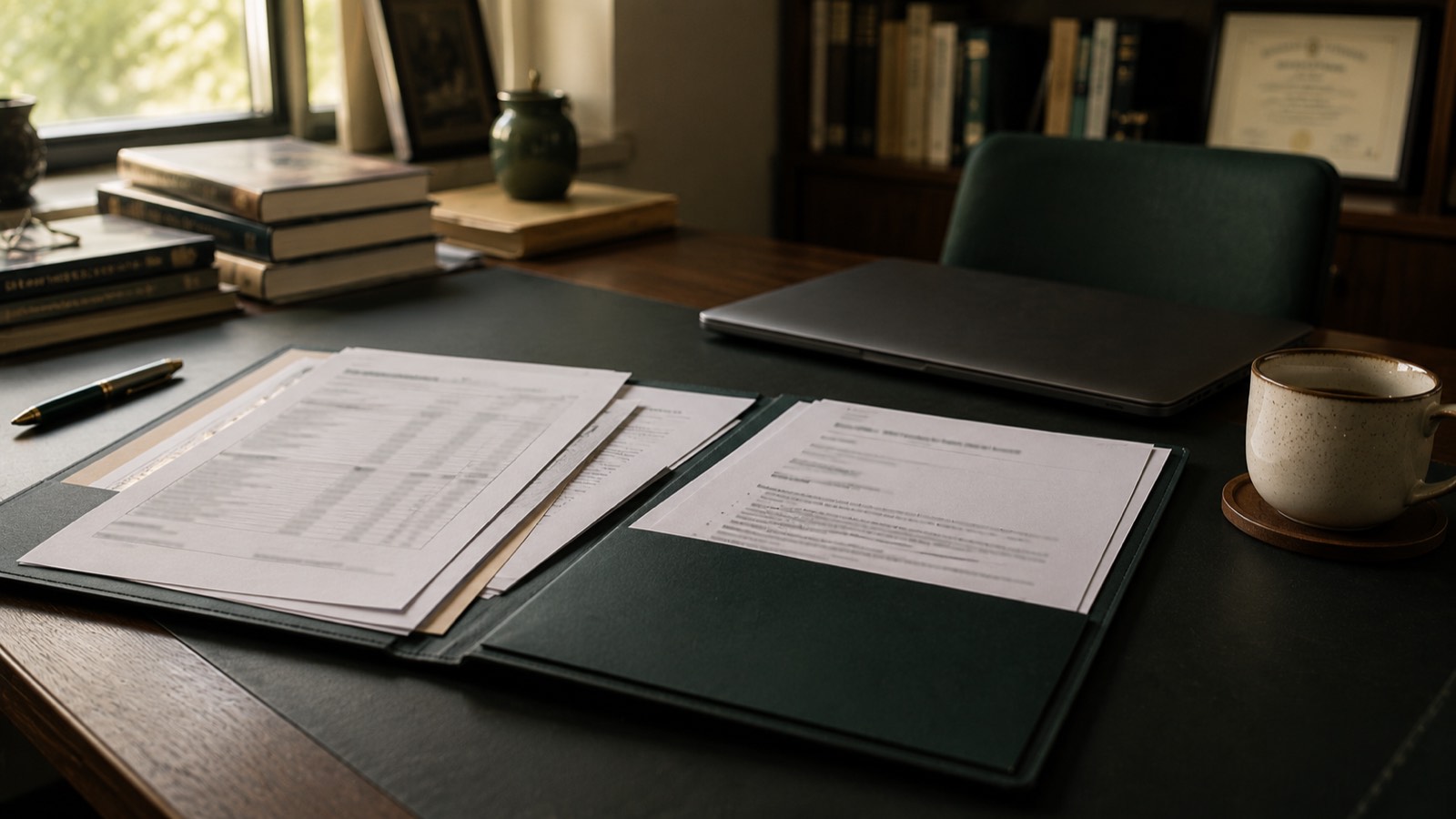
When and how to ask
Ask at least three weeks before your deadline, and a month or more if you need multiple letters or are applying to several programmes. Official guidance from Cornell's Graduate School is direct on this: professors have tight schedules and need real time to write a thoughtful, distinctive letter, not a rushed one (Cornell Graduate School).
Make the ask in person or in a scheduled meeting rather than an unscheduled drop-by, which shows you're taking the request seriously and gives the recommender room to ask questions about your goals (Stanford Academic Advising).
A rushed request produces a rushed letter. Three to four weeks of lead time is the minimum for a letter that actually helps you.
What to actually give them
Most applicants ask for a letter and give the recommender nothing to work with beyond a deadline. Official guidance from the University of Washington's School of Public Health and Cornell both point to the same core packet: a copy of your transcript, your CV or resume, and the specific list of programmes and deadlines you're applying to (University of Washington).
Here's the part most students skip: a short document reminding the recommender of specific moments they can reference directly, a project you did well, a piece of feedback they gave you, a class discussion you contributed to. A professor who taught two hundred students that semester cannot be expected to remember your specific contribution without help.
Specificity is the recommender's job made easy. Give them concrete material and they'll write a concrete letter, not a generic one.
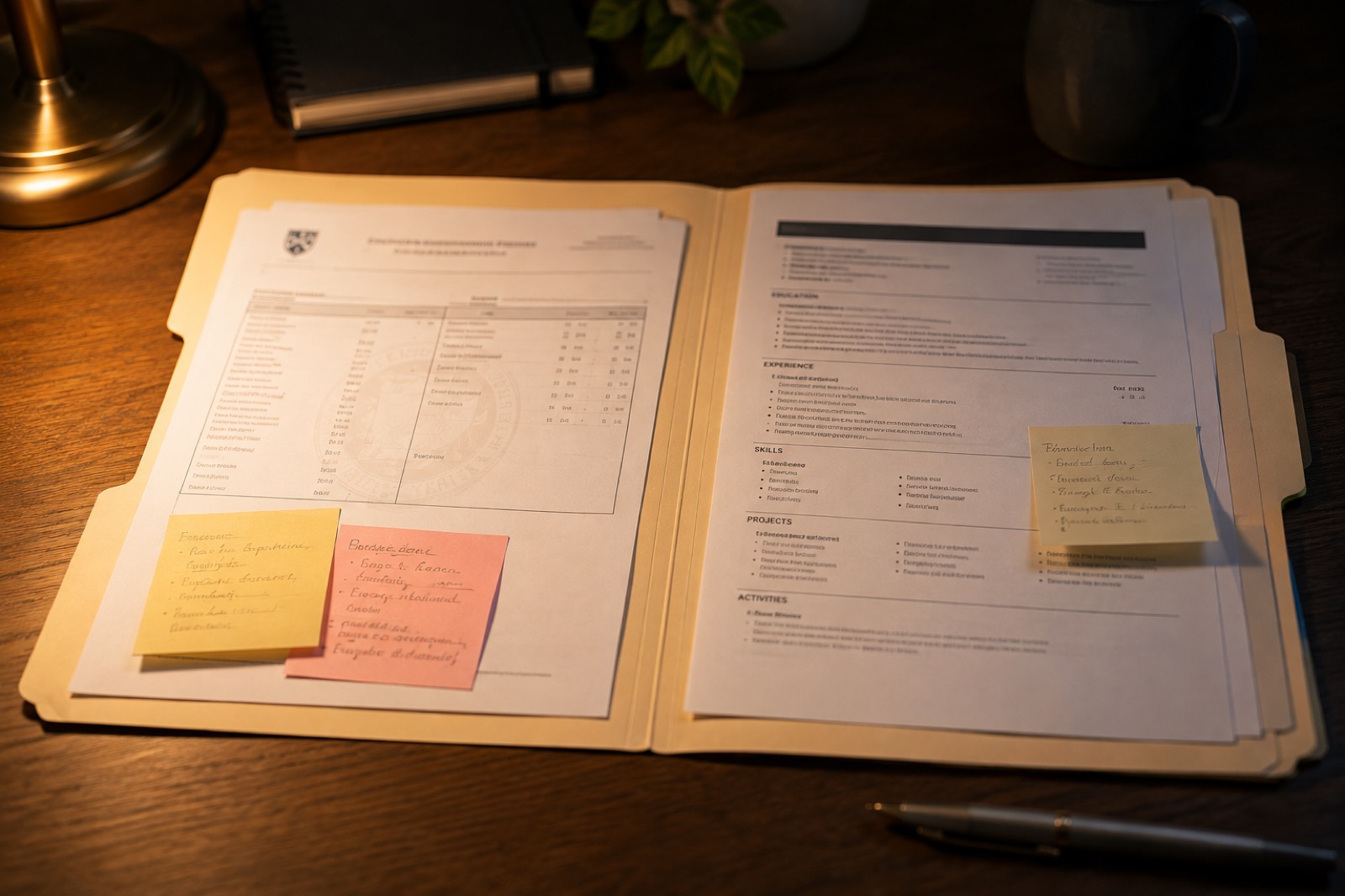
The briefing packet checklist
Key takeaways
- Ask at least three to four weeks before your deadline, not the week of.
- Make the ask in person or in a scheduled meeting, not an unscheduled drop-by.
- Give a full packet: transcript, CV, target programmes and deadlines.
- Include specific reminders of work they can reference directly, don't assume they remember.
- Follow up with thanks and an update after you hear back.
Frequently asked questions
How far in advance should I ask for a letter of recommendation?
At least three weeks before the deadline, and a month or more is safer, especially if you need multiple letters from the same recommender or across several programmes.
Should I ask in person or by email?
In person or over a scheduled meeting is generally preferred over an unscheduled drop-by or a cold email, since it shows you're taking the request seriously and gives the recommender a chance to ask questions.
What should I actually give my recommenders?
A concise packet: your transcript, your CV or resume, the specific list of programmes and deadlines, and a short document reminding them of specific projects, grades, or moments they can reference directly, rather than assuming they remember.
What if my recommender only knows me from one class years ago?
This is exactly the situation a detailed briefing document fixes. Reminding them of a specific project, a grade, a piece of feedback they gave, or a moment in class gives them concrete material to write from instead of generic praise.
Should I follow up after submitting my application?
Yes. A short thank-you note is standard practice, and updating them on your outcome is both courteous and useful if you ever need another letter from them in future.
Want your whole application reviewed together?
Book a free strategy call, we'll look at your SOP, LORs, and school list as one coherent package.
Book your free strategy call →Keep reading
Sources & further reading
- Requesting letters of recommendation — Cornell Graduate School
- Asking for letters of recommendation — Stanford Academic Advising
- Recommendation letters guidance — University of Washington School of Public Health