
The expectation-reality gap
Most students expect the hardest day to be day one: the jet lag, the unfamiliar airport, the first night alone. In practice, that's rarely true. Culture shock research consistently describes an initial honeymoon phase where everything feels new and exciting, curious, and optimistic, which usually lasts a couple of weeks before frustration sets in as the novelty fades (USC Office of International Services).
That means the emotional low point usually lands two to three months in, not on arrival. What most guides miss entirely is that a second, independent timeline, the admin one, tends to peak at almost the same moment, for reasons that have nothing to do with culture shock at all.
Day one is usually carried by adrenaline. The real test comes a few weeks later, when two unrelated timelines land on top of each other.
The admin timeline nobody explains in advance
Official university guidance is consistent on one point that rarely makes it into pre-departure advice: many essential setup tasks are sequential, not something you can knock out on day one. In the UK, a bank letter can only be requested once your student registration is fully complete, which pushes real bank account access to two to four weeks after arrival for most students (University of Sheffield International Welcome). In the US, opening an account typically requires a confirmed I-20 and a US address first, with the same two-to-four-week window being standard.
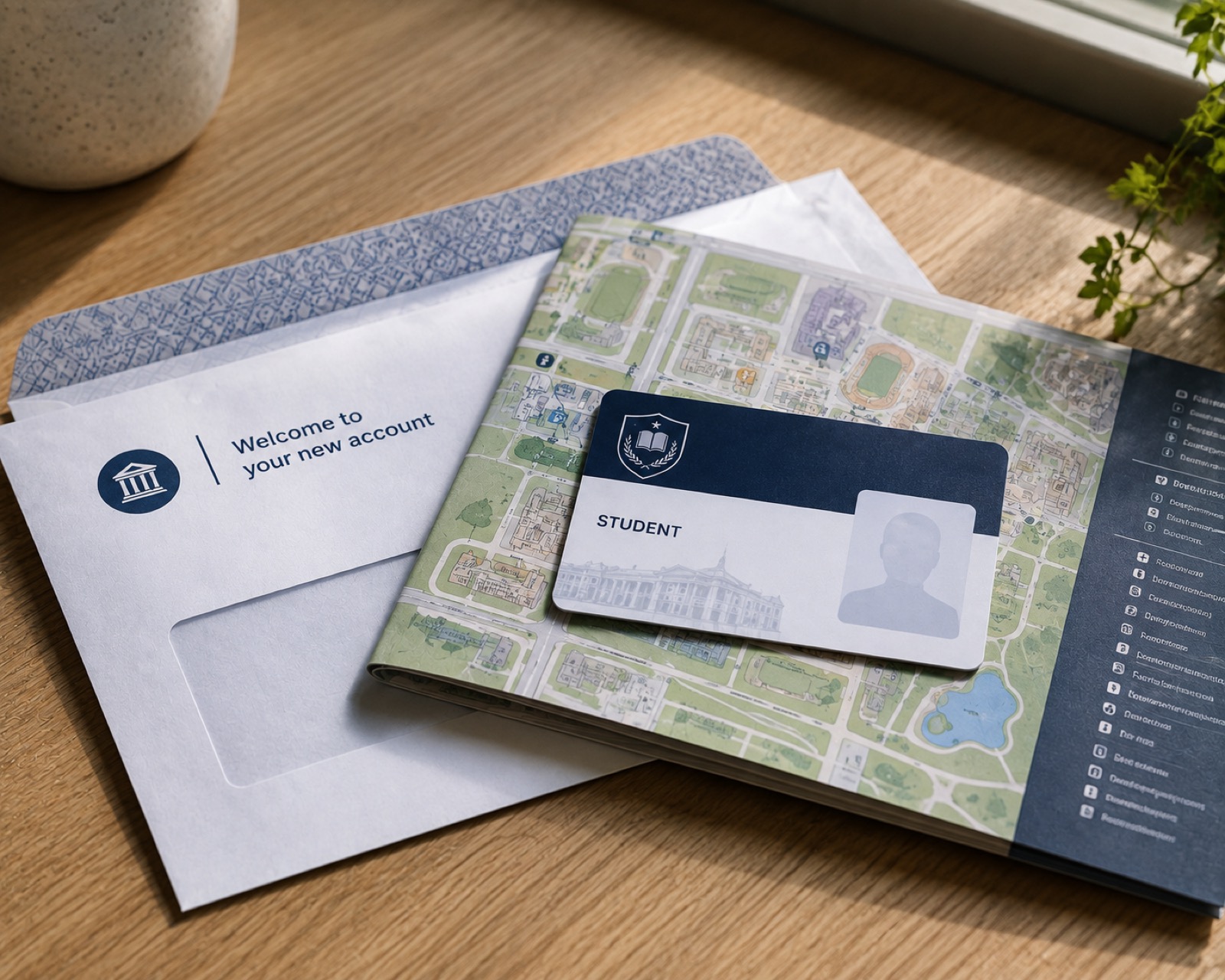
On top of that, most universities require a separate, in-person right-to-study or immigration document check before issuing a student ID card, distinct from any online registration completed before arrival (University at Buffalo International Student Services). Until that's done, some students find they can't yet access a library card, a gym, or even certain campus buildings, small frictions that compound.
Banking, ID cards, and full campus access are often gated behind sequential admin steps that simply can't be rushed, no matter how organised you are.
Why the two timelines collide
Here's the pattern I've seen consistently advising students through this transition: the admin backlog and the emotional frustration phase are not related, but they land in the same window almost every time. Around week two or three, a student is often still waiting on a bank account, still can't get a local SIM tied to a bank card in some countries, and is simultaneously hitting the point where the initial excitement of arrival has worn off. Neither problem causes the other, but together they feel like everything is going wrong at once.
Knowing this in advance changes how you interpret it. A frustrating week two isn't a sign you made the wrong choice, it's close to the median experience, driven by two independent, well-documented timelines that happen to overlap. For the deeper psychological side of this adjustment, including imposter syndrome and when to seek support, see our Psychological Side of Studying Abroad guide.
A hard week two or three is common, not a red flag. It's what happens when two unrelated timelines overlap by design, not by bad luck.
A realistic first-month checklist
Built around what actually has to happen sequentially, not an idealised day-one list.
Key takeaways
- The hardest stretch is usually weeks two to four, not day one.
- UK and US bank accounts commonly take two to four weeks to activate, gated behind registration and address confirmation.
- A separate in-person check-in is usually required even after online registration, before you get full campus access.
- Admin friction and culture-shock's frustration phase tend to land in the same window by coincidence of timing, not because one causes the other.
- Budgeting cash and a temporary SIM for the first month avoids the worst of the overlap.
Frequently asked questions
How long does it actually take to open a bank account abroad?
Often longer than students expect. In the UK, a bank letter can only be requested once student registration is complete, so accounts commonly open two to four weeks after arrival, not on day one. US students typically need a confirmed I-20 and a US address first, with the same two-to-four-week window being normal.
Why does everything feel harder in week two or three, not day one?
Because two separate timelines collide. Admin tasks like banking and ID cards are sequential and often can't start until you've completed registration, pushing real friction into weeks two to four. That is also when the culture-shock honeymoon phase typically fades and the frustration phase begins, so logistics and emotions peak at the same time.
Do I need an in-person check-in even after registering online?
Usually yes. Most universities require an in-person right-to-study or immigration document check to confirm your visa status and issue your student ID card, separate from any online registration completed before arrival.
Is it normal to feel more overwhelmed after two weeks than on arrival day?
Yes. Arrival day is often carried by adrenaline and novelty. The accumulated admin backlog and the fading of that initial excitement tend to land together a few weeks in, which is precisely when many students feel worst, not on day one.
Want the pre-departure plan mapped out for you?
Book a free strategy call and we'll walk through what to expect week by week, not just the admissions checklist.
Book your free strategy call →Keep reading
Sources & further reading
- Culture shock phases for international students — USC Office of International Services
- UK bank account and registration requirements — University of Sheffield
- International student check-in process — University at Buffalo