
The three windows compared
None of these three countries give a flat, single-number post-study work visa the way the headlines suggest. Each has its own name, its own conditions, and its own real duration, and confusing one for another is a common, costly research mistake for students comparing Europe against the UK, US, or Australia. This is a downstream question from Europe postgraduate admissions itself — worth revisiting once you're choosing between offers, not before.
| Country | Visa / permit name | Typical duration |
|---|---|---|
| Germany | Job seeker residence permit (§20) | Up to 18 months |
| France | APS (Autorisation Provisoire de Sejour) | ~12 months, renewable to ~24 for master's+ |
| Netherlands | Orientation Year (Zoekjaar) | 12 months |
France's route can end up the longest of the three on paper, but it depends on a renewal step Germany and the Netherlands don't require, which makes it less predictable to plan around.
Germany's job seeker visa
Germany's post-study option is a job seeker residence permit under Section 20 of the Residence Act, typically granted for up to 18 months. During that window, graduates can take up any job, not just one matching their degree, while they search for a role that does. This flexibility is one of the more genuinely generous features among European options, since most countries restrict what work you can do while job-hunting.
France's APS route
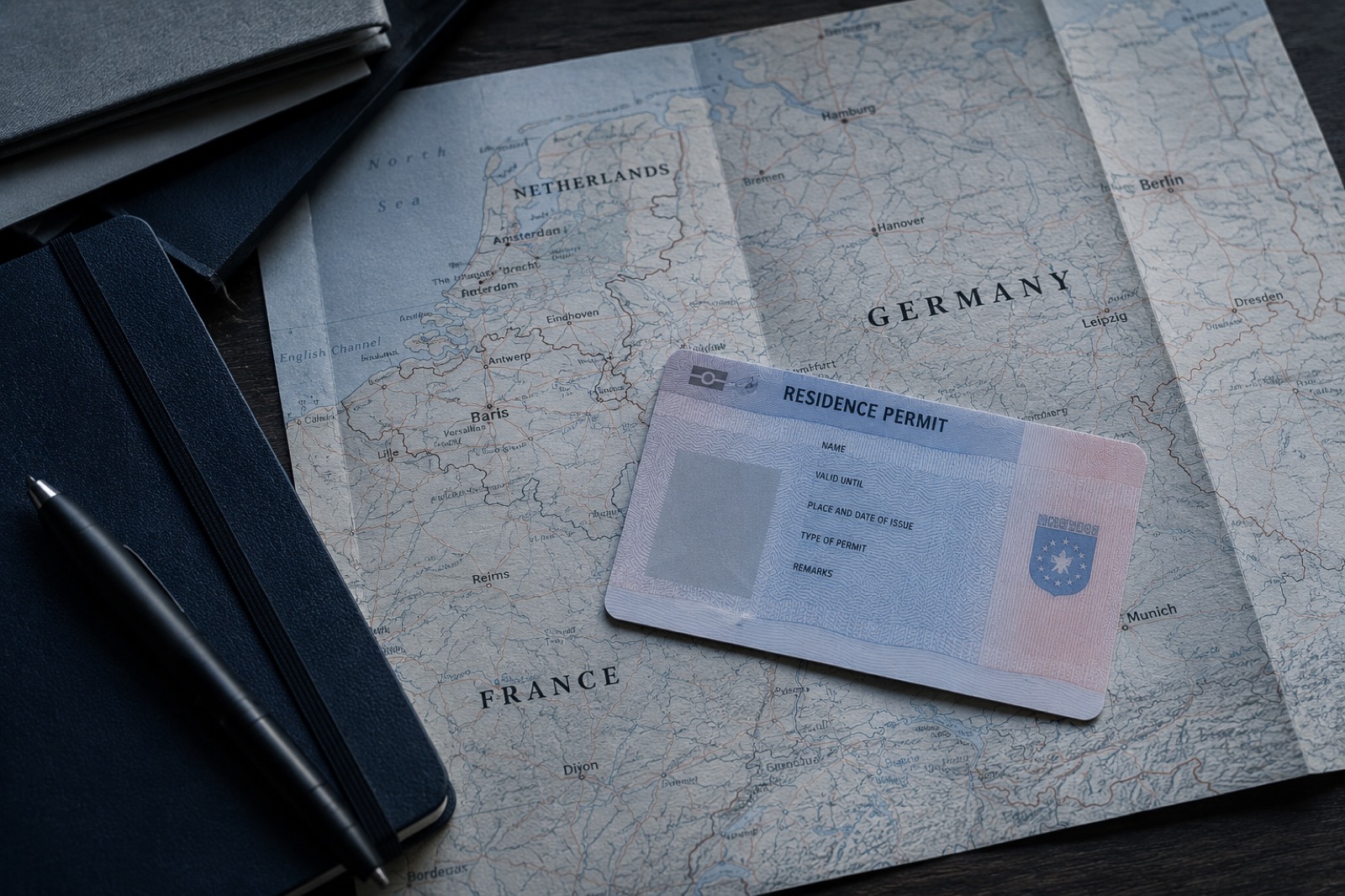
France's Autorisation Provisoire de Sejour is usually issued for around 12 months. Graduates of a master's degree or higher can generally apply to renew it, extending total post-study time to roughly 24 months, though the exact renewal terms and required job-related conditions should be confirmed directly with the French consulate handling your application, since these details vary and change.
The 24-month figure is a ceiling reached through renewal, not a guaranteed starting grant — plan around the 12-month baseline first.
The Netherlands' Orientation Year
The Dutch Orientation Year (Zoekjaar) gives recent graduates 12 months without the standard Dutch labour-market work-permit restrictions that apply to most other visa categories. That means freelancing, taking on multiple part-time roles, or starting a business are all realistically on the table, not just a single full-time job search.
Key takeaways
- Germany: up to 18 months, any job permitted while searching.
- France: ~12 months, renewable toward ~24 for master's+ graduates.
- Netherlands: 12 months, no labour-market restrictions — freelancing and business ownership allowed.
- Always confirm current terms with the relevant consulate before finalising a country decision on this basis.
Frequently asked questions
How long is Germany's post-study work visa?
Germany's job seeker residence permit under Section 20 of the Residence Act is typically granted for up to 18 months, during which graduates can take up any job while searching for a role matching their qualification.
How long does France's APS visa last?
France's Autorisation Provisoire de Sejour (APS) is typically valid for 12 months, though graduates of a master's degree or higher can generally apply for renewal, extending total post-study time to around 24 months. Confirm current terms with the French consulate before relying on this for a specific application.
What is the Netherlands Orientation Year visa?
It's a 12-month residence permit for recent graduates of a Dutch or select non-Dutch institution, allowing them to work, freelance, or start a business without the usual Dutch labour-market work-permit restrictions.
Which European country gives the longest post-study work window?
Among these three, France's APS route offers the longest potential window at up to roughly 24 months for master's-level graduates who renew, followed by Germany's 18-month job seeker visa and the Netherlands' 12-month Orientation Year.
Weighing Europe against the UK, US, or Australia?
Book a free strategy call and we'll map your destination options against your visa and career goals together.
Book your free strategy call →Keep reading
Sources & further reading
- Germany job seeker visa guidance — Make it in Germany (official)
- France APS residence permit — French consulate / Campus France official guidance (confirm current terms directly)
- Netherlands Orientation Year — Dutch Immigration and Naturalisation Service (IND) official guidance