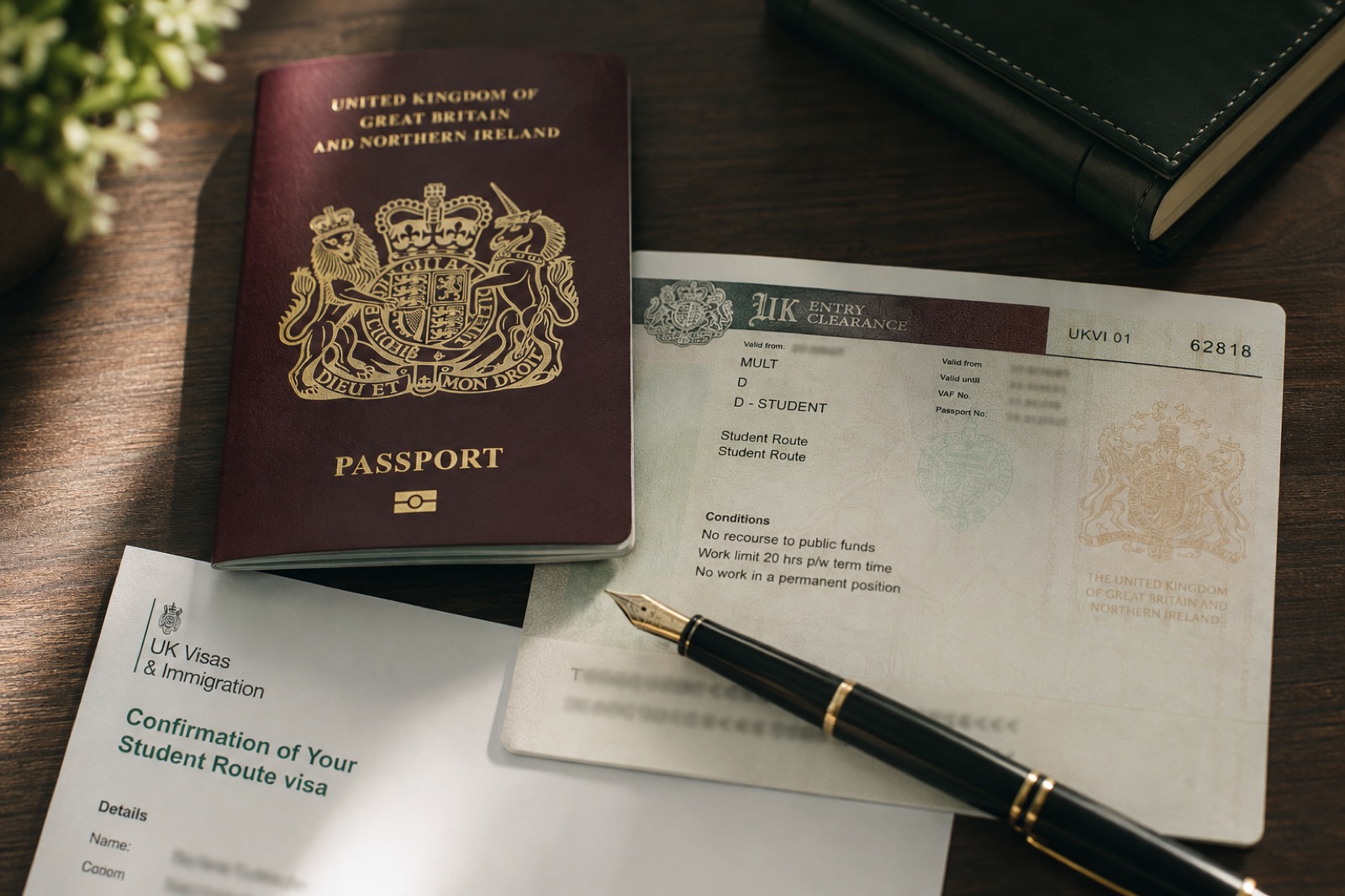
What it costs
The Student Route application fee is a flat £558, whether you're applying from outside the UK or extending or switching to it from inside the UK, according to GOV.UK. This is separate from the Immigration Health Surcharge, which is charged per year of the visa on top of this fee.
The financial requirement
Where you'll study changes how much you need to show. If your course is in London, you need £1,529 per month, for up to 9 months. Outside London, the figure drops to £1,171 per month, also for up to 9 months. In both cases, the funds must have been sitting in your account continuously for at least 28 days, with that 28-day window ending within 31 days of your visa application date, according to GOV.UK.
| Study location | Monthly requirement | Maximum months counted |
|---|---|---|
| London | £1,529 | 9 months |
| Outside London | £1,171 | 9 months |
The 28-day holding window is a hard rule, not a suggestion. Depositing the full amount two weeks before applying doesn't satisfy the requirement.
You're exempt from proving these funds separately if you've already been legally resident in the UK with a valid visa for at least 12 months before applying. Nationals from certain countries also fall under a "differential evidence requirement" and may not need to submit this proof upfront, though it can still be requested later.
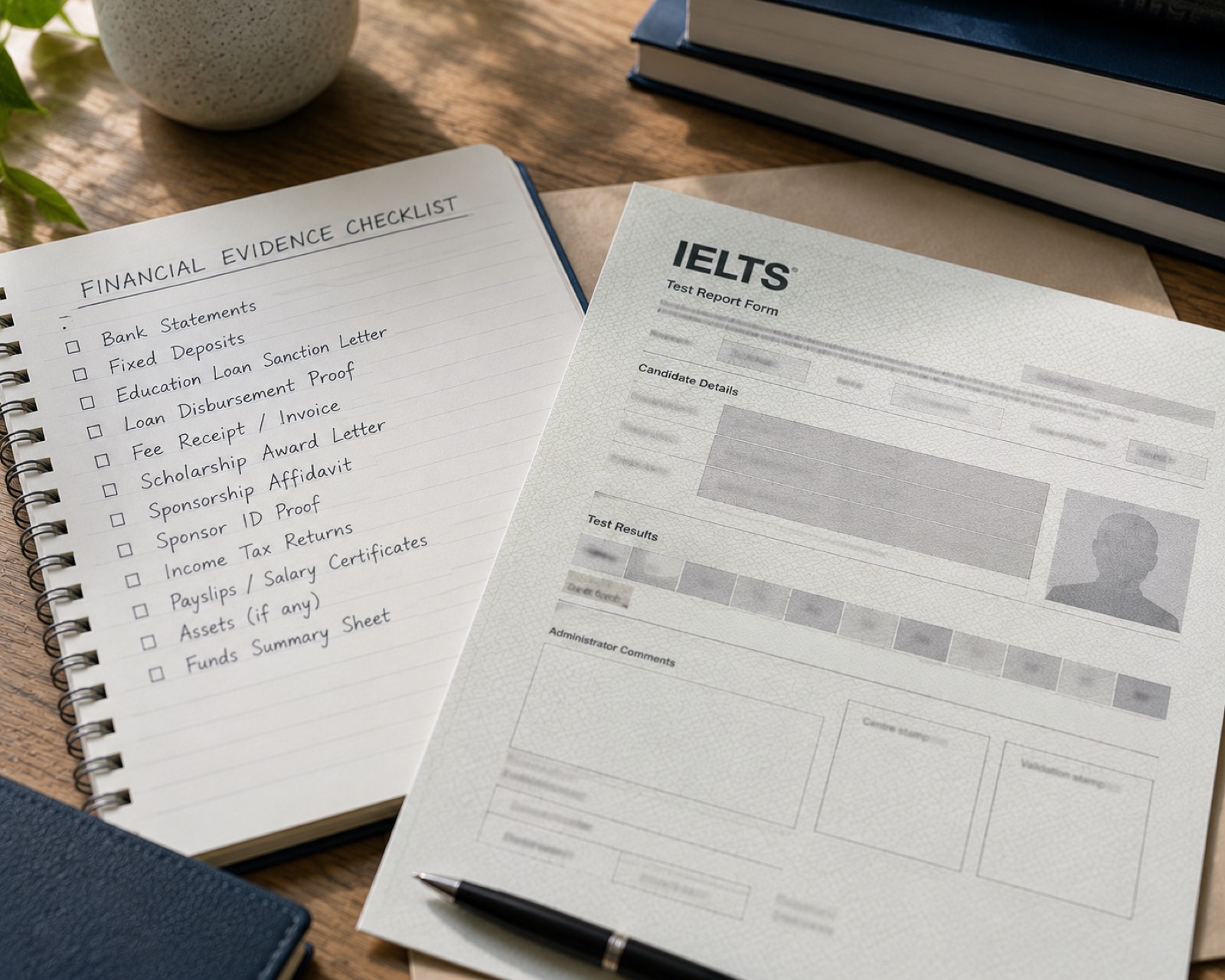
The English requirement
Degree-level courses and above require English proficiency equivalent to CEFR level B2; courses below degree level require B1. This can be demonstrated through UK qualifications, a UK degree, an assessed non-UK degree taught in English, or an approved Secure English Language Test (SELT). Seventeen nationalities, including the US, Canada, Australia, and Ireland, are exempt from proving this separately.
When to apply
From outside the UK, you can apply as early as 6 months before your course starts, with decisions typically taking around 3 weeks. From inside the UK, the window is 3 months before the course starts, with decisions typically taking around 8 weeks. Applying at the earliest possible point gives the most buffer if anything in your documentation needs correcting.
Documents to have ready
GOV.UK says everyone needs a current passport or other valid travel document, and a Confirmation of Acceptance for Studies (CAS) from the university. The CAS is the reference your university issues after you accept an offer, and you cannot apply without one.[4]
| Document | When you need it |
|---|---|
| Proof of funds | Everyone must show they can pay for the course and support themselves. The rules vary with circumstances, and the amounts are in the money section above. |
| ATAS certificate | Only if your course and nationality require it. GOV.UK notes that master’s-level courses and above may need one. |
| Sponsor consent | Written consent from your financial sponsor, if one covered your fees or living costs in the last 12 months. |
| TB test result | If you are from a listed country and staying six months or more. See the next section. |
| Parental consent | If you are under 18. |
Check the ATAS rule early. The certificate is a separate application and is easy to forget until the CAS arrives.
The TB test for applicants from India
You need a tuberculosis test if you are coming to the UK for six months or more and you have lived in a listed country for six months or more, or within the last six months. India is on the list.[5] [6]
The test must be done at a Home Office-approved clinic. The Home Office does not accept certificates from other clinics. GOV.UK lists approved clinics in Bangalore, Chennai, Delhi, Hyderabad, Mumbai and Pune, with contact details and fees.[6] The test is a chest x-ray. If the result is unclear you may be asked for a sputum sample.
If the test shows you do not have TB, the certificate is valid for six months from the date of the x-ray.[5] Time it so your visa application falls inside that window. A certificate that expires before you apply means paying for a second test.
Book the TB test after you have a CAS date in mind, not months before. The certificate lasts six months.
Bringing a partner or children
The rules tightened for courses starting on or after 1 January 2024. A full-time postgraduate student can bring a partner or children only on a PhD or other doctorate, or a research-based higher degree. Government-sponsored students on courses longer than six months can also bring dependants. Taught master’s courses are not covered by the postgraduate route. Each dependant pays their own visa fee.[7] For the wider effect of this change, see our analysis of UK student visa grants.
Key takeaways
- Application fee: £558 flat, regardless of applying from inside or outside the UK.
- Financial proof: £1,529/month (London) or £1,171/month (outside London), held 28 days.
- English requirement: CEFR B2 for degree-level, B1 below degree; 17 nationalities exempt.
- Apply up to 6 months early from outside the UK; decisions take roughly 3-8 weeks.
Frequently asked questions
How much does the UK Student Route visa cost?
The application fee is £558, whether applying from outside the UK or extending/switching from inside the UK, according to GOV.UK. This is separate from the Immigration Health Surcharge.
How much money do I need to show for a UK Student visa?
If studying in London, you need £1,529 per month for up to 9 months. Outside London, it's £1,171 per month for up to 9 months. This money must have been held continuously for at least 28 days, ending within 31 days of your application, according to GOV.UK.
What English level do I need for a UK Student visa?
CEFR level B2 for degree-level study and above, or B1 for below-degree courses, according to GOV.UK. Nationals of 17 exempt countries, including the US, Canada, and Australia, don't need to prove this separately.
How early can I apply for a UK Student visa?
Up to 6 months before your course starts if applying from outside the UK, or 3 months before if applying from inside the UK. Decisions typically take 3 weeks from outside the UK and 8 weeks from inside.
Do Indian students need a TB test for a UK student visa?
Yes, if you are staying six months or more and have lived in India within the last six months. The test must be done at a Home Office-approved clinic, and a clear result gives a certificate valid for six months from the date of the x-ray.
What is a CAS and when do I get it?
A Confirmation of Acceptance for Studies is the reference your university issues after you accept an offer. You need it to apply for the Student visa, so the visa step starts only after the university has issued it.
Can I bring my spouse on a taught master’s?
Generally no. For courses starting on or after 1 January 2024, a postgraduate student can bring dependants only on a PhD or other doctorate or a research-based higher degree, with a separate route for government-sponsored students on courses longer than six months.
Get Araya admissions updates
Visa and policy changes, deadlines and new guides for Master’s and MBA applicants. Short emails, no spam.
You are on the list
Thank you. We will email you when something changes that matters for your application.
Preparing your UK Student Route application?
Book a free strategy call and we'll map your documents and budget against the real requirements together.
Book your free strategy call →Keep reading
Sources & further reading
- Student visa: Overview (official) — GOV.UK
- Student visa: Money (official) — GOV.UK
- Student visa: Knowledge of English (official) — GOV.UK
- Student visa: Documents you must provide (official) — GOV.UK
- Tuberculosis tests for visa applicants (official) — GOV.UK
- Tuberculosis testing in India, approved clinics (official) — GOV.UK
- Student visa: Family members (official) — GOV.UK