
The US: Section 214(b) and the 2026 screening questions
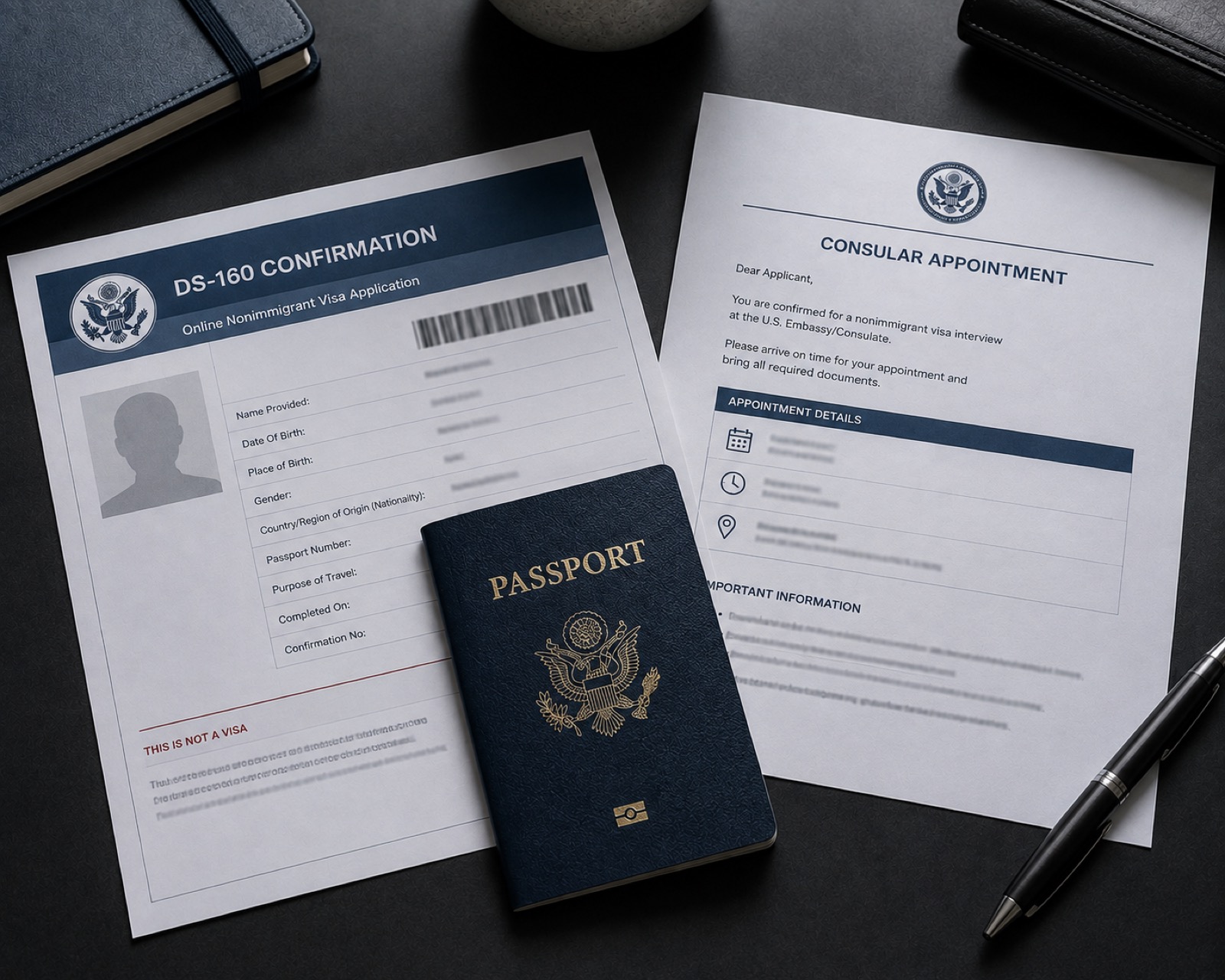
Every F-1 interview operates under Section 214(b) of the Immigration and Nationality Act, which presumes every nonimmigrant visa applicant intends to stay in the US permanently. The applicant carries the burden of proving otherwise. This presumption, not any single wrong answer, is what most 214(b) denials come down to: the officer wasn't convinced, in the time available, that you'd return home.
Since an internal State Department directive reported in late April 2026, officers have also been instructed to ask two additional questions of every nonimmigrant visa applicant, F-1 students included: whether they've experienced harm or mistreatment in their home country, and whether they fear returning there. According to multiple immigration law firms tracking the policy, answering "yes" to either question, or declining to answer, can result in denial.
These two questions are reportedly asked of every applicant regardless of visa category, not just those with a specific risk profile. Answer honestly and directly — they're not open invitations to elaborate.
What US officers actually ask
Beyond the screening questions, expect direct, fast-paced questions: the full name of your school (not an abbreviation), why you chose that specific institution over others, who is financing your education, and what your plans are after the program ends. Officers are listening for genuine, specific answers over rehearsed ones — vague responses about "wanting a good education" read as less credible than specifics about your program and funding.
The UK: credibility interviews
Not every UK Student Route applicant is interviewed. UK Visas and Immigration (UKVI) selects a mix of risk-flagged applications, previous refusals, unusual study gaps, or questionable finances, plus a random sample. When an interview is called, it typically runs 10-20 minutes, conducted entirely in English, by video link or phone.
What UK officers actually ask
UKVI's questions cluster around five areas: why this course and this university specifically, your academic history including any gaps, who is paying and where those funds came from, your plans after graduating, and practical knowledge of the city, campus, and living costs. The interview exists to confirm you're a genuine student who understands your own course and university, not to trip you up on trivia.
Key takeaways
- US: overcoming the 214(b) presumption is the whole game — specific, confident answers matter more than any single fact.
- Since April 2026, US officers ask every applicant two mandatory screening questions on harm and fear of return.
- UK: only a subset of applicants (risk-flagged plus random sample) are interviewed at all.
- UK questions cluster around course choice, funding source, academic history, and post-study plans.
Frequently asked questions
What is a 214(b) visa denial?
Section 214(b) of the US Immigration and Nationality Act creates a legal presumption that every applicant intends to immigrate permanently, and the burden is on the applicant to prove otherwise. A 214(b) denial means the consular officer wasn't convinced you'd return home, and it's the most common reason for F-1 refusals.
What new questions were added to US visa interviews in 2026?
Following an internal State Department directive reported in late April 2026, consular officers began asking every nonimmigrant visa applicant, including F-1 students, whether they've experienced harm or mistreatment in their home country and whether they fear returning there. A yes answer, or a refusal to answer, can result in denial, according to multiple immigration law firms tracking the policy.
How long is a UK student visa credibility interview?
UK credibility interviews with UKVI typically run 10-20 minutes, conducted in English by video link or phone. Not every applicant is interviewed — UKVI selects a mix of risk-flagged applications, such as previous refusals or unusual study gaps, plus a random sample.
What do UK credibility interviews actually ask about?
Most questions fall into five areas: why this course and university, your academic history and any study gaps, who is funding you and where the money came from, your plans after graduating, and practical knowledge of the city, campus, and costs.
Preparing for an upcoming visa interview?
Book a free strategy call and we'll run a mock interview specific to your destination and profile.
Book your free strategy call →Keep reading
Sources & further reading
- Credibility interviews — Coventry University (official student guidance) — Coventry University
- Student visa: Overview (official) — GOV.UK
- New State Department Visa Interview Questions for 2026 — Fisher Phillips LLP